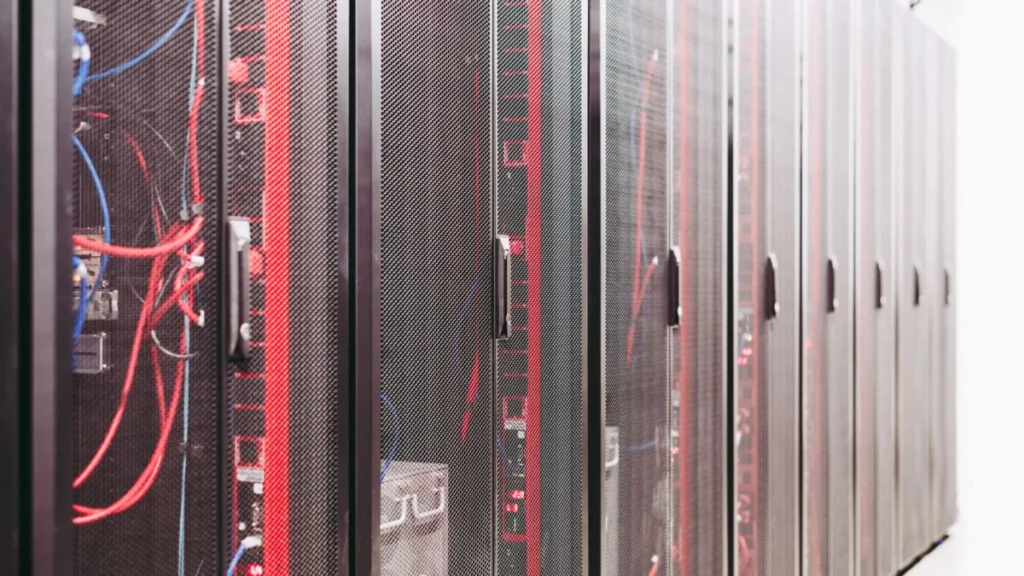
Data centers are physical infrastructure, not just online services. They need electricity, reliable connections, cooling, land and maintenance. Local sustainability planning can address these demands before individual facilities or cloud services are treated as isolated technology projects.
Why digital infrastructure belongs in a community energy plan
When a council plans utilities, industrial activity and public services, large new electricity users can change assumptions about available capacity and future upgrades. Data centers vary enormously in size and workload, but the planning questions are familiar: Where will the power come from? Which network improvements are necessary? What will the facility demand during peak conditions? Who bears the cost of new infrastructure? Those questions connect directly to community energy and infrastructure planning.
The International Energy Agency estimated that data centers used about 415 TWh of electricity worldwide in 2024, around 1.5% of global demand. Its subsequent analysis expects substantially higher use by 2030, with considerable variation by workload, efficiency and location. These global figures are context rather than a substitute for assessing a particular proposal. A small regional facility, cloud application and large AI complex should not be given the same footprint by assumption.
Start with an auditable baseline
Ask operators to specify expected annual electricity use, expected peak demand, backup arrangements and the assumptions behind projections. The relevant number for grid planning is not the same as a marketing claim about efficient servers. A project can have efficient equipment yet still create substantial load if it operates at a large scale. Compare demand scenarios instead of relying only on a single forecast. If the operator cannot share detailed figures publicly, a planning authority may still require confidential technical submissions and publish a meaningful summary.
Where electricity is procured through contracts for renewable generation, distinguish contractual purchasing from the local grid’s physical supply and the timing of energy use. A claim of ‘100% renewable’ may describe annual accounting while leaving unanswered questions about hourly demand and grid constraints. This distinction matters to residents evaluating local environmental effects.
Cooling, water and neighboring uses
Cooling strategies shape both power demand and water use. An air-cooled approach, evaporative cooling design and liquid-cooling installation have different trade-offs. Local climate, drought exposure, wastewater capacity and seasonal peaks determine which choices deserve closer study. Communities should request water-source information, drought-response procedures and realistic resource figures instead of treating one efficiency metric as a complete sustainability score.
Consider nearby housing, schools, essential services and industrial users. Planning reviews should explain whether electrical or water upgrades are shared public benefits, privately funded capacity, or obligations that will later fall on ratepayers. The same logic used for stormwater and public infrastructure applies: assess the full system rather than one property line.
What to measure during operation
Useful disclosures include annual energy use, peak load, the effectiveness of the cooling system, water consumption and periodic updates on the operator’s mitigation commitments. Power Usage Effectiveness (PUE) can describe facility overhead, but it cannot by itself show the carbon intensity of electricity or the social effects of expansion. Water Usage Effectiveness (WUE) also needs local context. A low number on one measure should never be presented as proof that every environmental concern has been solved.
Public reports should clearly distinguish measured results from design expectations. Where relevant, include noise, backup-generation testing, building reuse and equipment end-of-life handling. For explanations of technical performance aimed at residents, see how digital performance dashboards can communicate evidence.
Connect infrastructure planning to the services it supports
Data center capacity is used by many industries: municipal software, public websites, education, streaming, social media and online entertainment. The footprint attributable to an individual service depends on its workload, device choices, network path and the way shared infrastructure is measured. The next guide explores how online entertainment fits into this wider digital footprint without assuming every platform uses the same amount of energy.
A local planning checklist
- Identify baseline power demand, peak load and expansion scenarios.
- Assess water sources, seasonal cooling requirements and drought resilience.
- Clarify who pays for grid and utility upgrades.
- Separate projected performance, operational results and renewable-energy purchasing claims.
- Publish an accessible summary of the monitoring plan and community impacts.
Further reading: International Energy Agency, Energy and AI (2025) and Key Questions on Energy and AI (2026), including electricity-demand and grid-planning analysis. Visit the Digital Infrastructure guides or return to Green Playbook.